
Online Roulette: How the Wheel, Odds and Bets Work
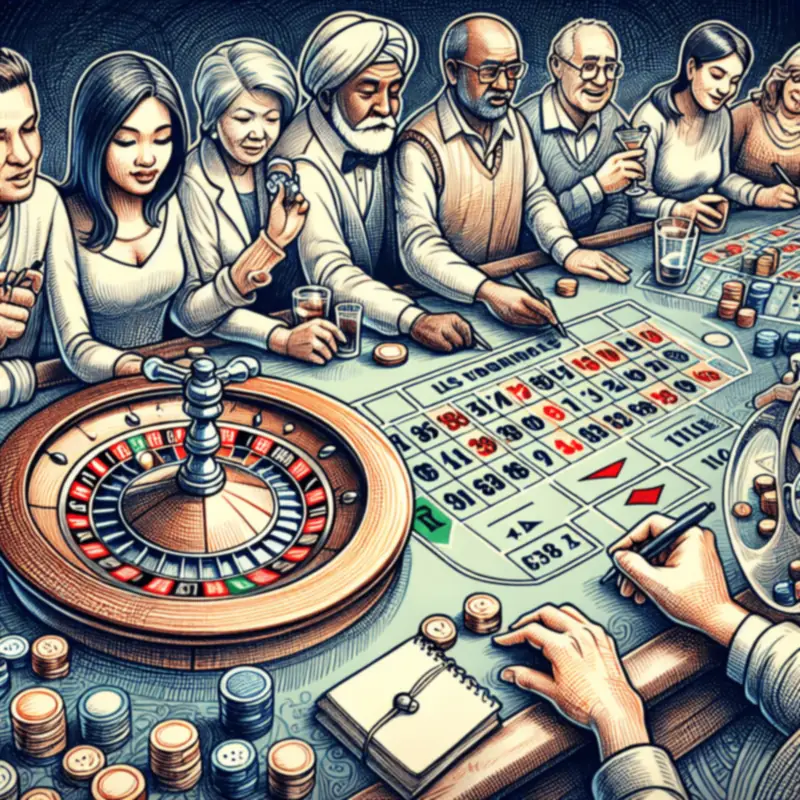
Roulette has survived every shift in casino technology because the core game needs no explanation: pick a number or a colour, and watch the ball decide. Online play has added live streamed tables, faster wheels and a wider choice of variants, but the maths has not moved an inch. This guide covers the rules, the odds behind each bet, and what betting systems can and cannot do for you.
What Online Roulette Is
Online roulette comes in two broad formats. Software roulette runs on a random number generator, spins instantly and lets you play at your own pace. Live dealer roulette streams a physical wheel from a studio, with a croupier spinning in real time and a betting window that closes before the ball drops.
The wheel itself determines the house edge, and there are three standard layouts:
- European roulette: 37 pockets, numbers 1 to 36 plus a single zero. House edge of 2.70 per cent on almost every bet.
- American roulette: 38 pockets, with an added double zero that pushes the edge to 5.26 per cent.
- French roulette: the European wheel plus the La Partage rule, which returns half of a losing even-money bet when the ball lands in zero, halving the edge on those bets to 1.35 per cent.
Everything else is presentation. Given the choice, the single-zero wheel is always the better game.
How to Play and What Each Bet Pays
You place chips on the layout during the betting window, the wheel spins, and winning bets are paid at fixed odds. Bets divide into two families.
Inside bets
These cover individual numbers or small groups. A straight-up single number pays 35 to 1, a split covering two numbers pays 17 to 1, a street of three pays 11 to 1, and a corner of four pays 8 to 1. High payouts, low hit frequency.
Outside bets
These cover large blocks. Red or black, odd or even, and high or low each pay even money and land a little under half the time on a single-zero wheel. Dozens and columns cover twelve numbers and pay 2 to 1.
Every one of these bets carries the same house edge on a given wheel. The choice between them is a choice about variance, not about value: inside bets deliver rare, large results, outside bets deliver frequent, small ones. Our complete guide to mastering roulette online works through the table layout in more detail.
Tips and Strategy
Betting systems organise your stakes; they do not change the odds of any spin. Understanding that distinction is the single most useful thing a roulette player can learn.
- Martingale: double after every loss on an even-money bet, so one win recovers the run. It fails when a losing streak meets the table maximum or the end of your bankroll, which happens more often than players expect.
- Fibonacci: step stakes along the Fibonacci sequence after losses and back down after wins. Gentler than Martingale, with the same underlying exposure to long runs.
- D'Alembert: raise one unit after a loss, drop one after a win. The slowest progression, and the least likely to hit a table ceiling.
- Flat betting: the same stake every spin. Unspectacular, and the easiest to control.
Three habits do more for your results than any system: choose a single-zero wheel, set a session budget and a walk-away point before you start, and avoid raising stakes to chase a loss. There is no pattern in previous results to read, because the wheel has no memory of them.
Live Dealer and Speed Variants
Live tables are now the centre of online roulette. High-definition streams, multiple camera angles and chat with the croupier close much of the gap with a land-based floor, and most studios run tables around the clock at a wide range of stake levels.
Speed roulette formats compress the cycle to well under a minute per spin. That is appealing if you find the standard pace slow, but it changes your exposure: more spins per hour means the house edge applies more often to the same bankroll. If you play a fast table, drop your stake to match.
Before you sit down, check the table limits and the wheel type. A table badged as premium is not automatically a better bet than the standard table next to it, and a double-zero layout costs you almost twice the edge. For a run-through of table selection, see our ultimate guide to online roulette.
Bonuses and Bankroll
Casino promotions apply to roulette differently than to slots, and the terms decide whether an offer is worth taking.
- Game contribution: table games often count for a reduced percentage towards wagering requirements, sometimes as little as ten per cent.
- Excluded bets: many bonus terms void play that covers most of the layout at once, because it would guarantee a low-risk clear.
- Cashback: a share of net losses returned, usually with lighter conditions than a deposit match.
- Maximum stake: bonus terms commonly cap the stake per spin while bonus funds are in play.
Set a budget for the session, decide what a win worth banking looks like, and withdraw it when you get there. Roulette is adult entertainment for players aged 18 and over, and no approach to it guarantees a profit.
Frequently asked questions
Which roulette wheel gives the best odds?
French roulette, when the La Partage rule is in force. It uses a single-zero wheel and returns half of a losing even-money bet on zero, cutting the house edge on those bets to 1.35 per cent.
Does the Martingale system work in online roulette?
It recovers small losses reliably and then fails badly on a long losing run, when the required stake exceeds the table limit or your bankroll. It reorganises risk rather than removing the house edge.
Is live dealer roulette fairer than software roulette?
Neither is fairer. Live tables use a physical wheel under camera supervision, software tables use a certified random number generator, and both pay the odds set by the wheel layout.
Can past results predict the next spin?
No. Each spin is independent, so a run of reds tells you nothing about the next result. Scoreboards displayed at the table are a record, not a forecast.
Ready to play? Every game covered here is live at game.ubet.fun — or browse more Roulette guides first.
Play now at game.ubet.fun